Well I am not going to beat around the bush with this novel – I am stuck between liking it and not liking it. The unhappy fact that it took me quite a long time to get into the novel, was very frustrating, but that is mainly due to the lack of direction. I suppose I have been accustomed to reading very plot driven novels and this was a sudden jump into the deep end of character driven narrative. However, the confusing paradox is that I like Holden as a narrator, even though he is confused, alienated and dysfunctional in his reality and that of a narrator, I felt his narration was honest and true.
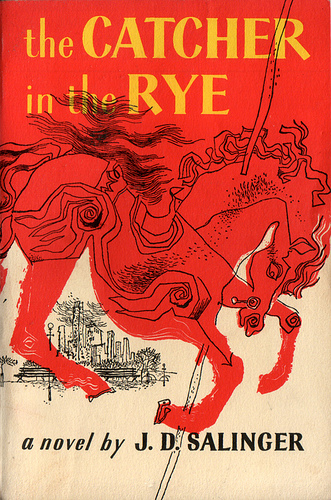 The plot, if you can call it that, starts with Holden Caulfield farewelling his former school (which he flunked out of) Pencey Prep: seeing off old teachers, talking to fellow students, finishing in a fight with his roommate (over a girl his roommate just had a date with and who Holden knew), and then he decides to leave that night instead of waiting for a few more days. He travels to New York (where he lives) and checks into a questionable hotel, before hitting the town. He interacts with multiple women putting the moves on some, but becomes terrified when approached by Sonny the prostitute. He has little patience for men his own age (Holden is 16 years old, but he does know older boys from previous schools he flunked out of), he either finds them annoying, avoids them if he can or enjoys annoying them. He interacts better with a former English teacher, who later became a family friend, Mr Antolini, who he readily takes advice from but run from him, when he thinks Mr Antolini is making a “flit” pass at him.
Throughout all of his experiences in New York, I only really enjoyed when he sneaked back to his home to see his younger sister, Phoebe. It was the first time in the narrative when he isn’t harshly criticising another behaviours, as everyone he interacts with are either criticised for having a “phony” behaviour or being an uninteresting moron. It was in his conversations with Phoebe and Mr Antolini that I began to understand the nature of Holden’s view point, and the meaning behind the narration style. Holden suffered the death of his brother, Allie, when he was younger and witnessed suicide of a boy at one of his schools; from these traumas Holden idolised the innocence of childhood. All the phony behaviour Holden disliked was associated with adults, social etiquette, sexual activities; and he saw children as honest, innocent, and true to their own natures. It was expressing a fear of growing up, of change; Holden didn’t want change. He wanted to stay exactly the same like the displays at the museum, to keep going around on the carousel. It was expressed beautifully in his desire to be ‘the catcher in the rye’, to stop children from running out of the playground of rye and over the cliff to death/adulthood.

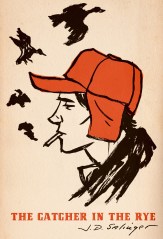
Another reason I am unsure of my feelings regarding this books, is that Holden is so desperate for affection and company but he continuously pushed people away. Holden was trying to understand the change he was going through in his teens, the blessed years of puberty, so he buys the red hunting hat to declare his individuality. However, at the same time he wants to alienate himself from the change and from the people around him who are growing up, so he constantly pushes people away by being nasty or just running away. However, by creating that defence of alienation he makes himself so lonely that he craves affection, but is too scared to truly experience it. As you read it is clear he is pushing himself further and further towards a nervous breakdown, which does occur, and you finally find out he is retelling his ‘long weekend’ from an institution about a year later.
I cannot completely disregard one of Salinger’s most popular novels, as he does end it with very realistic sense of hope, but it is a raw view into the human experience that one should be prepared for.
 The Novel Nomad