Blood and Circuses by Kerry Greenwood

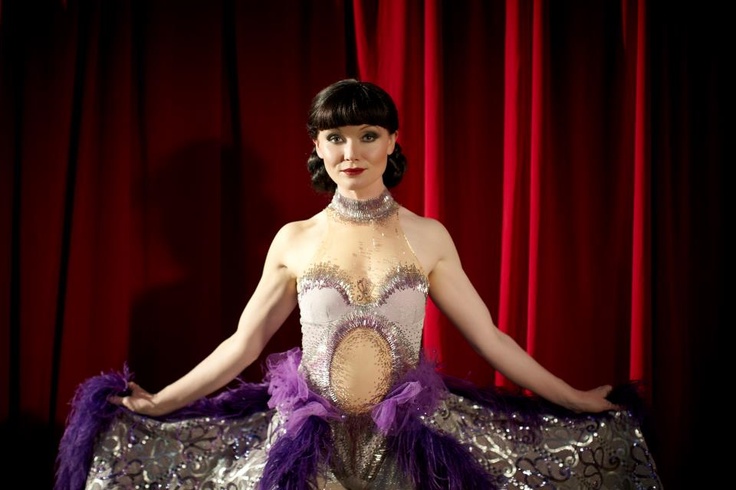
Australia is undoubtedly a ‘new’ country in the terms of recorded history, and it makes research hard for any contemporary author. Do not mistake me, there is a lot of good Australian historical fiction that has been wonderfully researched, but many lack the glamour and style that Kerry Greenwood’s Phryne Fisher series has in spades. I first experienced Miss Fisher as the television adaption created by the ABC, which enchanted me with the decadent costumes, Australian sets, and the vivacious characters. Even with an entertaining two seasons of Miss Fisher, I wanted more, so I turned to reading the original novels.

blood-and-circuses

The Honourable Miss Phryne Fisher is a modern woman for 1928; sporting a black bob cut, luxurious clothes, a wealth of money, and an abiding desire for handsome young men. Phryne left her family behind in England and returned to her birth place, Melbourne, where she soon discovered that she had an aptitude for work as a ‘lady detective’. This novel is the sixth in the series and had a very different approach, and I am divided on whether I liked it or not. The previous five novels had Phryne working her way through the various levels of Melbourne society, conducting her investigations with an air of confidence and a degree of stylish sleuthing. However, in Blood and Circuses, Phryne is bored with her comfortable life, and is persuaded to help her carnival friends to help the ill-fated Farrell’s Circus.

Phryne doesn’t know how to help her friends but she decides it would be easiest to go undercover, to get close to the circus people by being amongst them. She becomes Fern Williams, an aspiring horseback performer who is eager to ask questions on the questionable future of the circus. As Phyrne busies herself into the circus scene, a valued member of the troupe, Mr Christopher, is brutally murdered in Melbourne. Not to fear as the reliable Detective Inspector Jack Robinson is called onto the cast. A former trapeze circus performer, Miss Parkes, is suspected of the murder but Jack is not convinced. The evidence to convict her was so easily found, and killer needed a more sinister motive than any Miss Parke can hold. Greenwood begins to deepen the mystery by including the unrest stirring between two gang circles of lower Melbourne, and a hushed organisation known as ‘EXIT’ smuggling wanted criminals out of the country.
ac4a933297428ceb2926fbe9351007aa

Jack suspects the sudden gang violence is not only related to EXIT but remotely linked to the troubles of Farrell’s Circus, which means that Phryne buried herself in very dangerous territory. Whilst the Police deals with the murders and gangs, Phryne was having equally hard time find a place in the circus life. She was being ignored, snubbed, and the victim of vicious circus gossip; the strong and wily Miss Fisher that was established over the last five novels was being stripped away. Phryne found that she missed the distinction of her wealth and position, and she had returned to her impoverished youth (which was a living nightmare for Phryne).  She did find allies, and a new lover, but it is not enough to stop her from falling into the hands of the dangerous Mr Jones, the man expected of bringing misfortune on the circus.

This wild element of fear and loneliness really clashed with my image of Phryne, questioning if I truly liked her. Thinking about her sudden incapability to take control of her situation, Phryne still manages to fight those in control, which I still see as a test of true strength and honest resolve, all admirable. Blood and Circuses is one of the better mysteries so far; as Greenwood takes us beyond the scintillating parties and high fashion of Phryne Fisher’s known element, to a completely different society that lives on the fringes of normal society and operates under its own rules.
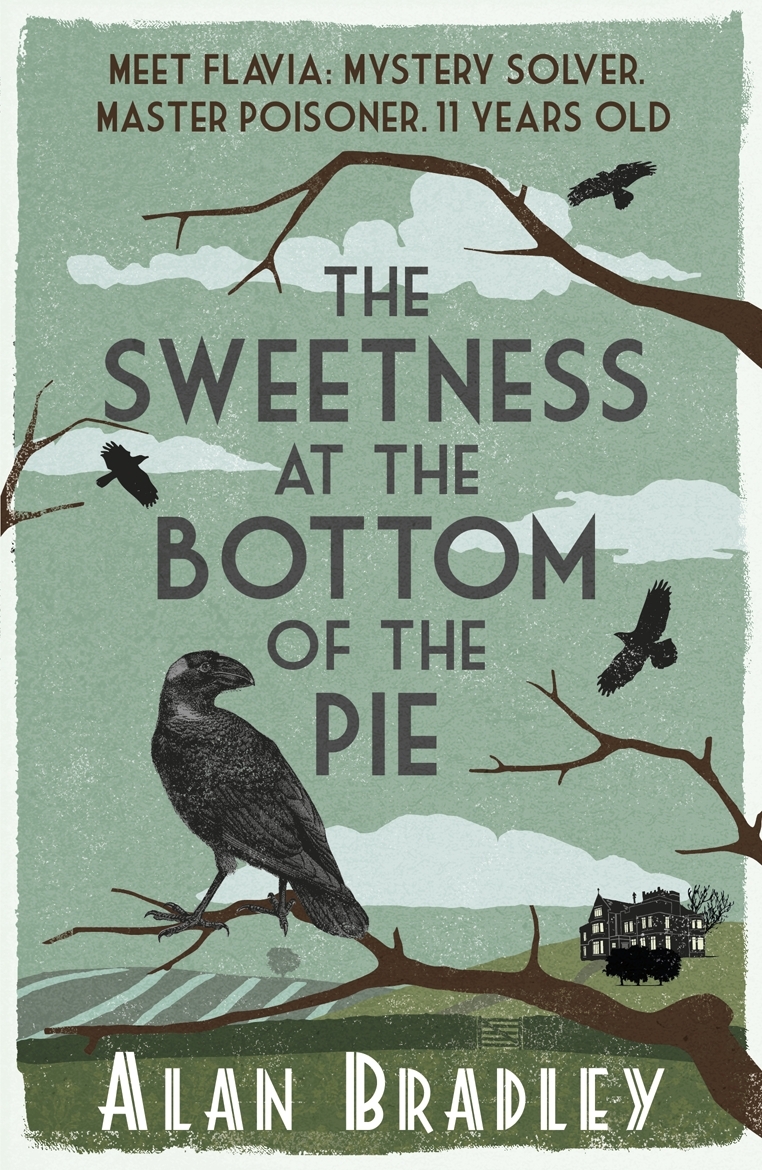
 

The Sweetness at the Bottom of the Pie by Alan Bradley

Another favourite 2013 Book Club selection.

I was recommended it by a fellow English student, after I confessed that out of all the genres I read crime the least. Strange, when I considered that I really enjoy crime TV shows. Regardless, it seemed to be one of the better introductions to crime as it was not too intense, well how could it be with an eleven-year-old protagonist? But, I soon learnt not to underestimate Flavia de Luce.

sweetness

In a traditional crime fiction fashion, the novel opens on a crime, well a sibling crime where Flavia is bound, gagged, and stuffed into the upstairs closet. The act is committed by her two older sisters, Ophelia and Daphne. We soon discover that not only is Flavia used to this treatment, she can quickly free herself from her imprisonment and be the first to arrive for dinner. I really enjoyed Bradley’s style of writing and his introduction of Flavia, as she had a strong voice that demanded my attention. She was also a refreshing protagonist; as she was still affected emotionally but her method of reasoning was methodical often being turned into a scientific experiment that called upon her vast wealth of knowledge. Also her age and the era she was living in made it interesting background to strengthen her character, which also helped her to connect to a modern reader base.

Once you are introduced to the de Luce family, with all the quirks and conflicts, Bradley suddenly inserts the mysterious jack snipe and a man who comes calling for Colonel de Luce (Flavia’s father and only parent). But it is not a crime novel without death, and so the mysterious man was found by Flavia the next morning, half buried in the cucumber patch, issuing his dying words to her. As the police come to suspect her father, Flavia tries to solve the mystery herself by delving into her father’s past to save him frim his present fate. The intricacy of the story between her father’s early experiences with Bonepenny (revealed to be the mystery man) gave Flavia even more mysteries to solve, but I must admit that when the novel slipped into the long back stories I was counting the pages. Yet I cannot fully discredit the back story as it became essential to form a greater narrative in my mind, leading to speculating on many potential suspects. My accusations never rested with one person and flew wildly from one to another, basically anyone who acted in a suspicious manner around Flavia, the Police, and even at the mention of the murder.

Sweetness Fixed3

The idea that Bonepenny was killed by a super sweet pie, which was considered by the Police and Flavia, was a very disappointing cause of death (even for a diabetic). I was praying it would not be the true cause of death, and I was answered by a clever conclusion that needed all of Flavia’s chemistry skills to deduce and solve. However, in the final pages when she was confronted by the murderer, I truly felt as vulnerable as an eleven-year-old girl but Flavia was resourceful enough to find her way out. Bradley ended the book with a resolution to the murder but a vast array of unanswered questions, which means I will be picking up the next book very soon! Overall, the writing style, the era and the crime complexity were detailed enough to make the book a joy to read. Yet, my main interest lies in the characters and how Bradley invested pages to make them dimensional, flawed, and brilliant in their own way.

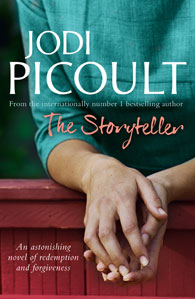
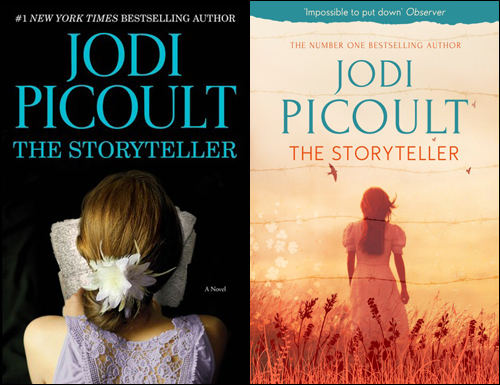
The Storyteller by Jodi Picoult

I hosted a book club during 2013 and many of the books we chose were sensational, so I have decided to share my past reviews.

‘The Storyteller’ was my first Jodi Picoult experience… and I can say assuredly that I LOVED EVERY PAGE! I have had bad experience before with a big name author in the field of themed fiction, and I did have a small trace of dread when starting this book that the experience would be the same. I am not sure if it was the writing style, the use of characters or even the thick mystery that surrounded the plot, but this book captured my attention and made me wanting to keep turning the pages.

ImageThe story itself was broken into separate sections, the first being a relatively obscure story relating to a girl called Ania, her father the baker and a upiór (Polish vampire) . This was an interesting place to begin and it made more sense the further I read into the novel, especially linking it back to Minka’s experiences. Yet it was Sage’s narrative that introduced the reader to the novel, which I thought was an interesting choice of character to carry the story. I was conflicted whether I trusted her as a narrator, due to her shadowy past, being a self-confessed introvert, and her affair with Adam (the funeral director). She did help bring the story into the modern day and make it more accessible for the modern reader, but I was instantly questioning her morals as a narrator (which is a major question throughout the entire novel). However, in the same breath, it is Sage’s detachment from family and religion that make her the best narrator for the piece. As I have stated, Sage has a dubious past that involved the death of her mother, which she blames herself and gave her the facial scarring, and most of her existence is living in fear of family and guilt. She hides away by working night hours in a bakery (which is a passion of hers) and the only has limited social interaction, until she meets the kind old German man, Josef Weber. However, her new friend in Josef admits to her that he was a Nazi and he wishes Sage (a non-practicing Jew) to help him die.

Picoult definitely did not go for a tame topic of moral questioning, and the novel quickly is swept up into the fascination of the Nazi prosecution and moral question behind the relevancy of such “justice”. This is where Leo makes a tidy entrance (and did anyone else know immediately that he was going to be a possible love interest for Sage… I certainly thought so).  Leo, the US federal Nazi hunter, was an open, honest character; making his narration was easy to follow and often contained the humourous observations and interactions. Although I did not agree with his moral view point, which was strictly black and white, but that made him such an easy character to read as his opinion was brutally clear. Sage and Leo sections were also interlaced by Josef’s tales of youth and the Polish Vampire story, which kept the viewpoints changing and raising doubts in my mind of whether mercy is a possibility.

Image

Being a greatly interested in WWII, Josef story was fascinating yet confronting, which I am sure was the intention of Josef and Picoult (shock to create reaction). However it was Minka’s (Sage’s Polish Grandmother) epic recollection of her youth in Poland, then adolescence in the ghettos, and finally her experiences in Auschwitz, that really captured my attention. I think I connected with Minka a lot more than any other character, as strange as it sounds, but I think Picoult was trying to force us into that environment to challenge our impartial moral views and sympathy for the enemy, which Minka has in spades (also shown in her Polish Vampire tale). Regardless of length, Minka’s section was amazing and it linked the rest of the novel in so well, even posing more questions in the mind of the reader. I did think it rather coincidental that Minka would know the man, Josef claimed to be (but reading into Josef’s story and heart beyond Minka and Sage it was clear why he ended up where he did).

The novel raced to a conclusion after the revelation of Minka’s history, but the question of moral justice and sympathies towards an enemy was left open. As Sage took the situation out of Leo/ the Government’s hands and decided his fate, which also opened another can of worms on the euthanasia debate (which did relate to the Nazi mentality). I also guessed the reasonable terrible plot twist for Sage after the deed was done, early on in Minka’s narration and when I revisited Josef’s narration. Otherwise, it was an amazing read and so beautifully interwoven that I did not feel cheated in any part of the story; just utterly content and suffered ‘book hangover’ for a few days after.

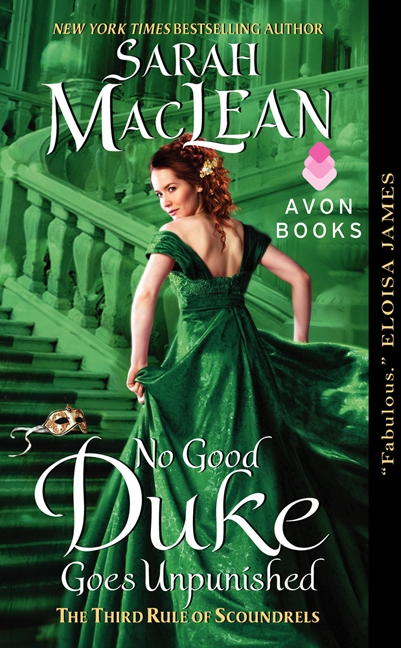
No Good Duke Goes Unpunished by Sarah MacLean

With the distractions of work, social events and household chores, I will always find time for a Sarah MacLean novel. I have been a fan of Sarah MacLean since her YA romance ‘The Season’, and then strengthened the attachment throughout ‘The Numbers’ series, and now, I am basking in the joys of her ‘Rule of Scoundrel’ series. ‘No Good Duke’ is the third title in the series, focusing on the feared Killer Duke, Temple… and oh boy! Does the steam pour from the pages.9780062068545

After suffering through the jerk that is Bourne (a lovable jerk, I grant you), then adoring every page of Cross’s encounter with fate, I did not know what to expect with Temple. You learn from the earlier novels that his reputation was destroyed one evening when he awoke in a bed of blood, and then he was cast from society and his father’s house. However, he rises from the ruination to become one of the owners of London’s most exclusive casino, The Fallen Angel, and the most famed bare-knuckle boxer in England (I think the fact he is built like a mountain also does something to further his fierce reputation). With his fierce reputation settled, MacLean introduces him with a balance of grace and reserve, making him all the more intriguing.

Temple is a strong character (physically and mentally) so when the fierce and feisty Mara Lowe makes her appearance, I was gleefully aware that a sparring battle would commence. Mara comes upon the brooding Duke when he is returning home, surprising him, as she was the woman that he was accused of murdering twelve years before.  Naturally, he is angry and wants to hold her captive until she told him the truth, but the truth would come at a cost. Mara’s brother lost his money to the Fallen Angel and she wants the debt forgiven and for Temple not to fight him (that was an option for the men to regain their losses, if they managed to beat Temple in the ring). The deal they settle upon is Mara’s ruination and return to society, giving the Duke back his ‘good’ name, but before he can impose on her further she drugs him and escapes.

The plan of ruination and revenge has never been successful, in my experience of romance novels, as it merely offers the two leads a chance to spend a lot of time together. Such encounters between Temple and Mara, are had at the charming Miss Herbert’s establishment, finding their way back to Mara’s own home and establishment, an orphanage, where she has been hiding for the past few years (it was established under her pseudonym of Miss Macintyre). Mara’s humble existence within the orphanage, with the adorably protective boys and a pet pig named Lavender, is sickly with want of empathy but it is refreshing. MacLean takes us out of the world of society wallflowers falling for scoundrels, and into the world of a nouveau riche tradesman daughter who did not want to enter high society and is happy when working. The fact that MacLean introduces this working class girl (with lots of gumption) to a Duke who had learned to work to survive, somehow make them become perfect partners.

Regardless of Mara’s spirit, Temple is the true attraction for me throughout this entire novel, as it is his feelings that bleed through the pages. They face each other numerous times but support each other when threatened, but they continue to withhold truths from each other out of stubbornness (more on Mara’s part, out of fear I guess). The chemistry between them is vibrant making the sex scene practically flashing neon lights and fireworks… fanning was required. The ending did seemed prolonged with frustrating (mainly by the predictable actions of self-sacrificing, Mara), but the epilogue was worth the wait, with that huge plot twist for the entire series!

Once again Sarah MacLean delivers a Regency romance that cannot be matched for narration style, characters and resistance to the norm. I think it fair to assume I will be hungering for her next and final installment to this sinfully satiating series.

Be prepared to fall in love with her characters when you follow this link.

And so it begins…

As the sun dawned on the new day and New Year, I was in bed. Asleep. With good intentions to be up at 8:30am, but found myself still napping through my alarm clock snooze system until 10:40am (by that time I was already late for my friend’s farewell beach walk).

Thankfully, I got ready fast enough to make up for the two hours of unplanned, but fully intentional sleep, and see my friend off on her big holiday. Once home I was able to start the two essential New Year’s day tasks:
1. Clean up after the New Year’s Party the previous night, mainly in the washing of dishes as my dogs took care of any crumbs on the floors.
2. Taking down the old calendars and putting up the new ones, which have been awaiting display since September.

With the essentials taken care of, in my mind it was high time for a reading break

the-rosie-project-graeme-simsion-1

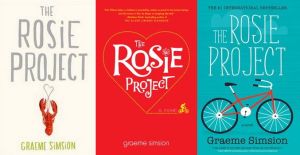
Graeme Simsion’s novel ‘The Rosie Project’ has been gaining a lot of popularity and here in Australia was named in the ‘Top 50 Books You Can’t Put Down’ for 2013. The recommendations were enough to get me interested, but detailed blurb and first page cemented my determination to read it. I am not lying to you when I say they accurately described the book as one you cannot put down, as I started reading it at 1PM and finished it seven and a half hours later. Usually when I feverously devour a book, it is due to the ease of narration or the strong hook of the plot (commonly a romantic thread), yet I was strangely attached to the principal character, Don Tillman.

Don is, to put it mildly, obsessive-compulsive and loves nothing more than to follow his carefully planned schedule that optimizes for efficient use of time and energy. He lacks social skills and has only managed to make a few friends in his life, but he has his work as a genetics professor and that is enough. Until he is told by Daphne, one of his oldest friends, that he would make a great husband for someone, which leaves Don stunned as he had resigned himself to a future without a partner. The new self-confidence results in the creation of the ‘Wife Project’, in which potential future partners have to fill out a carefully constructed questionnaire to be even considered by Don.

The construction and implementation of the project brings more laughs to the readers and frustration to Don, until Rosie enters his office. Rosie is a great character, as not only does she represent someone Don would never consider ‘future partner’ material, he is helpless drawn to her and forces his way to spending time with her. By spending time I mean hatching an elaborate project to discover who her biological father is, you guessed it, dubbing it the ‘father project’. These multiple projects cross-sectioning over Don’s life, and Rosie forcing out of his schedule and into a world he would have never dared to experience, has you frantically turning the pages. Again I was slightly driven by the potential romance between Don and Rosie, I honestly just read for Don and his experiences.

As when I began reading the novel, I read Don as a written form of Sheldon Cooper (from the Big Band Theory) as the narration and observations made by Don kept the novel in a comic frame. Yet Simsion was able to quickly humanize Don, making him not only a source of humour but of empathy. I found him immediately refreshing as a narrator, as his social faults were made immediately aware yet he managed to win me over with constant bravery, openness, and honesty.

On the surface the novel is enchantingly sweet and impressively humorous, but contains deeper truths of reality and social norms that are additionally compelling.

Each new day is…

Each new day is a blank page in the diary of your life. The secret of success is in turning that diary into the best story you possibly can.
-Douglas Pagels-

The New Year has never loomed as menacingly over me as the New Year’s party has; constantly questioning the magnitude of the celebration being worthy of the past year. Do I have enough food? Are there enough choices of drinks to please everyone? Damn, I forgot the serviettes. Should I have brought the sparklers?

Yet, I have decided to approach this New Year with clarity and determination, especially concerning the ever important New Year Resolutions. Instead of the popular choices of: limiting my chocolate consumption (laughable effort on that score); going to the gym more often (perhaps should have been doing ‘physical exercise at the gym more often’); and focusing more on my studies than the internet (and here I am). I have whittled it down to specific resolutions that will play upon my favourite past times, reading and writing.

First, I will compete in the Goodreads 2014 Reading Challenge and attempt to read 100 books throughout the year. However, I have decided to give myself the extra incentive of donating a gold coin every book I read to The World Literacy Foundation (http://www.worldliteracyfoundation.org/), so others can learn to enjoy the magical world within books.

Second, I will develop my writing skills through short stories, book reviews and travel blog entries. I am also undertaking some writing courses at the University, so I hope to have a greater understanding of the craft and my voice by the end of the year.

It is now time to fill these pages with travels, tales and typos.Image::Photo taken in the Austrian State Library in Vienna, 2012::