Another favourite 2013 Book Club selection.
I was recommended it by a fellow English student, after I confessed that out of all the genres I read crime the least. Strange, when I considered that I really enjoy crime TV shows. Regardless, it seemed to be one of the better introductions to crime as it was not too intense, well how could it be with an eleven-year-old protagonist? But, I soon learnt not to underestimate Flavia de Luce.
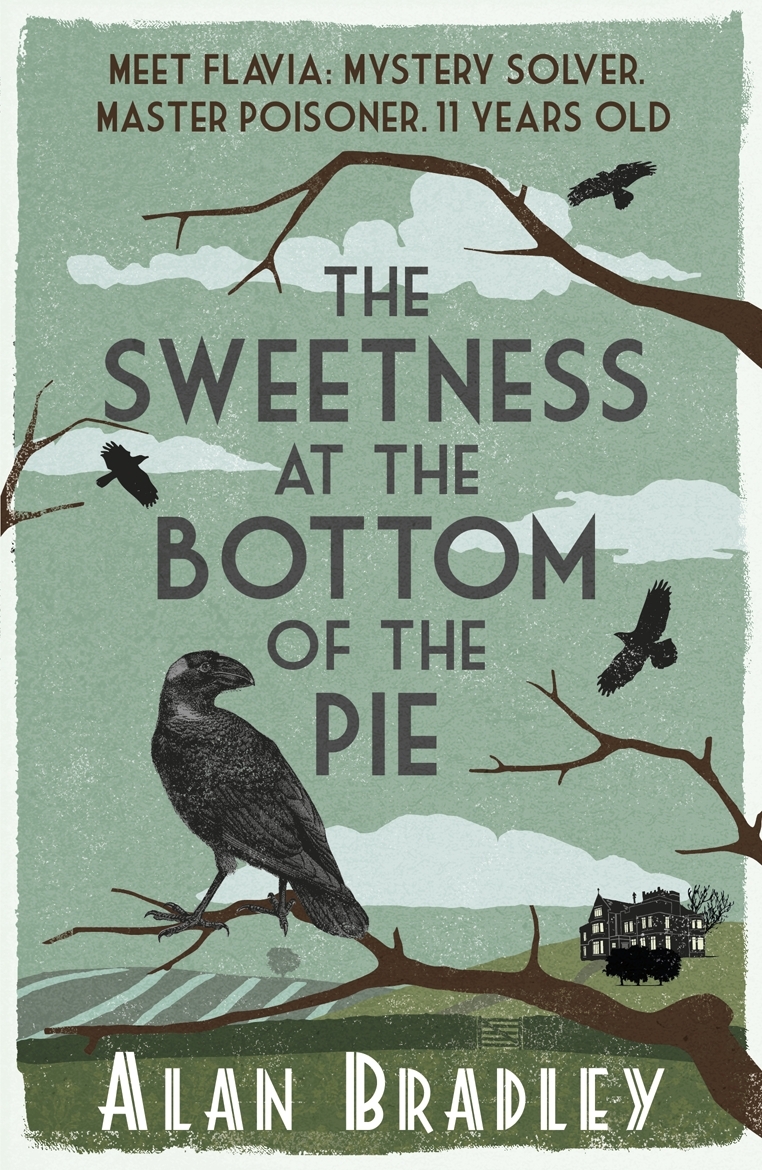
In a traditional crime fiction fashion, the novel opens on a crime, well a sibling crime where Flavia is bound, gagged, and stuffed into the upstairs closet. The act is committed by her two older sisters, Ophelia and Daphne. We soon discover that not only is Flavia used to this treatment, she can quickly free herself from her imprisonment and be the first to arrive for dinner. I really enjoyed Bradley’s style of writing and his introduction of Flavia, as she had a strong voice that demanded my attention. She was also a refreshing protagonist; as she was still affected emotionally but her method of reasoning was methodical often being turned into a scientific experiment that called upon her vast wealth of knowledge. Also her age and the era she was living in made it interesting background to strengthen her character, which also helped her to connect to a modern reader base.
Once you are introduced to the de Luce family, with all the quirks and conflicts, Bradley suddenly inserts the mysterious jack snipe and a man who comes calling for Colonel de Luce (Flavia’s father and only parent). But it is not a crime novel without death, and so the mysterious man was found by Flavia the next morning, half buried in the cucumber patch, issuing his dying words to her. As the police come to suspect her father, Flavia tries to solve the mystery herself by delving into her father’s past to save him frim his present fate. The intricacy of the story between her father’s early experiences with Bonepenny (revealed to be the mystery man) gave Flavia even more mysteries to solve, but I must admit that when the novel slipped into the long back stories I was counting the pages. Yet I cannot fully discredit the back story as it became essential to form a greater narrative in my mind, leading to speculating on many potential suspects. My accusations never rested with one person and flew wildly from one to another, basically anyone who acted in a suspicious manner around Flavia, the Police, and even at the mention of the murder.

The idea that Bonepenny was killed by a super sweet pie, which was considered by the Police and Flavia, was a very disappointing cause of death (even for a diabetic). I was praying it would not be the true cause of death, and I was answered by a clever conclusion that needed all of Flavia’s chemistry skills to deduce and solve. However, in the final pages when she was confronted by the murderer, I truly felt as vulnerable as an eleven-year-old girl but Flavia was resourceful enough to find her way out. Bradley ended the book with a resolution to the murder but a vast array of unanswered questions, which means I will be picking up the next book very soon! Overall, the writing style, the era and the crime complexity were detailed enough to make the book a joy to read. Yet, my main interest lies in the characters and how Bradley invested pages to make them dimensional, flawed, and brilliant in their own way.
 The Novel Nomad