Cinnamon and Gunpowder by Eli Brown | Book Review

3.75 Deliciously Piratical Stars

Pirates, explosions and Gourmet? Oh my!


The basic premise that a chef taken captive on a pirate ship forced to cook one gourmet meal a week for the dastardly lady pirate, is a wonderful hook. Yet this book offers so much more than mere echoes of the Romantic adventure stories. Eli Brown tantalizes the reader’s taste and smell with evocative descriptions of ingredients, cooking and final serving. If you enjoy food and reading of food then Owen Wedgewood is your dear friend.

However, the creation and science of the food is explored as Wedgewood must develop basic ingredients from the crudest of pantries. I must admit I found this fascinating, reading how the development of a yeast culture was essential for baking but the conditions forced him to inventive measures.

The plot was not new, but the politics behind the tale was curious. Highlighting the devastating impact of expanding European consumption of ‘exotic’ teas/fabrics/trade, the abuse of opium and the idealist supremacy behind colonialist ventures. The character arc was pleasantly developed and allowed the reader to join him in the gradual understanding of wider politics.

A fun tale that moved swiftly with action and captivated me with food. A recommended read for any foodies wanting an adventure with pirates on the high seas.

Click below to watch a video of Eli Brown discussing his book Cinnamon and Gunpowder

hqdefault

Blood and Circuses by Kerry Greenwood

Australia is undoubtedly a ‘new’ country in the terms of recorded history, and it makes research hard for any contemporary author. Do not mistake me, there is a lot of good Australian historical fiction that has been wonderfully researched, but many lack the glamour and style that Kerry Greenwood’s Phryne Fisher series has in spades. I first experienced Miss Fisher as the television adaption created by the ABC, which enchanted me with the decadent costumes, Australian sets, and the vivacious characters. Even with an entertaining two seasons of Miss Fisher, I wanted more, so I turned to reading the original novels.
blood-and-circuses

The Honourable Miss Phryne Fisher is a modern woman for 1928; sporting a black bob cut, luxurious clothes, a wealth of money, and an abiding desire for handsome young men. Phryne left her family behind in England and returned to her birth place, Melbourne, where she soon discovered that she had an aptitude for work as a ‘lady detective’. This novel is the sixth in the series and had a very different approach, and I am divided on whether I liked it or not. The previous five novels had Phryne working her way through the various levels of Melbourne society, conducting her investigations with an air of confidence and a degree of stylish sleuthing. However, in Blood and Circuses, Phryne is bored with her comfortable life, and is persuaded to help her carnival friends to help the ill-fated Farrell’s Circus.

Phryne doesn’t know how to help her friends but she decides it would be easiest to go undercover, to get close to the circus people by being amongst them. She becomes Fern Williams, an aspiring horseback performer who is eager to ask questions on the questionable future of the circus. As Phyrne busies herself into the circus scene, a valued member of the troupe, Mr Christopher, is brutally murdered in Melbourne. Not to fear as the reliable Detective Inspector Jack Robinson is called onto the cast. A former trapeze circus performer, Miss Parkes, is suspected of the murder but Jack is not convinced. The evidence to convict her was so easily found, and killer needed a more sinister motive than any Miss Parke can hold. Greenwood begins to deepen the mystery by including the unrest stirring between two gang circles of lower Melbourne, and a hushed organisation known as ‘EXIT’ smuggling wanted criminals out of the country.

ac4a933297428ceb2926fbe9351007aa

Jack suspects the sudden gang violence is not only related to EXIT but remotely linked to the troubles of Farrell’s Circus, which means that Phryne buried herself in very dangerous territory. Whilst the Police deals with the murders and gangs, Phryne was having equally hard time find a place in the circus life. She was being ignored, snubbed, and the victim of vicious circus gossip; the strong and wily Miss Fisher that was established over the last five novels was being stripped away. Phryne found that she missed the distinction of her wealth and position, and she had returned to her impoverished youth (which was a living nightmare for Phryne).  She did find allies, and a new lover, but it is not enough to stop her from falling into the hands of the dangerous Mr Jones, the man expected of bringing misfortune on the circus.

This wild element of fear and loneliness really clashed with my image of Phryne, questioning if I truly liked her. Thinking about her sudden incapability to take control of her situation, Phryne still manages to fight those in control, which I still see as a test of true strength and honest resolve, all admirable. Blood and Circuses is one of the better mysteries so far; as Greenwood takes us beyond the scintillating parties and high fashion of Phryne Fisher’s known element, to a completely different society that lives on the fringes of normal society and operates under its own rules.


The Sweetness at the Bottom of the Pie by Alan Bradley

Another favourite 2013 Book Club selection.

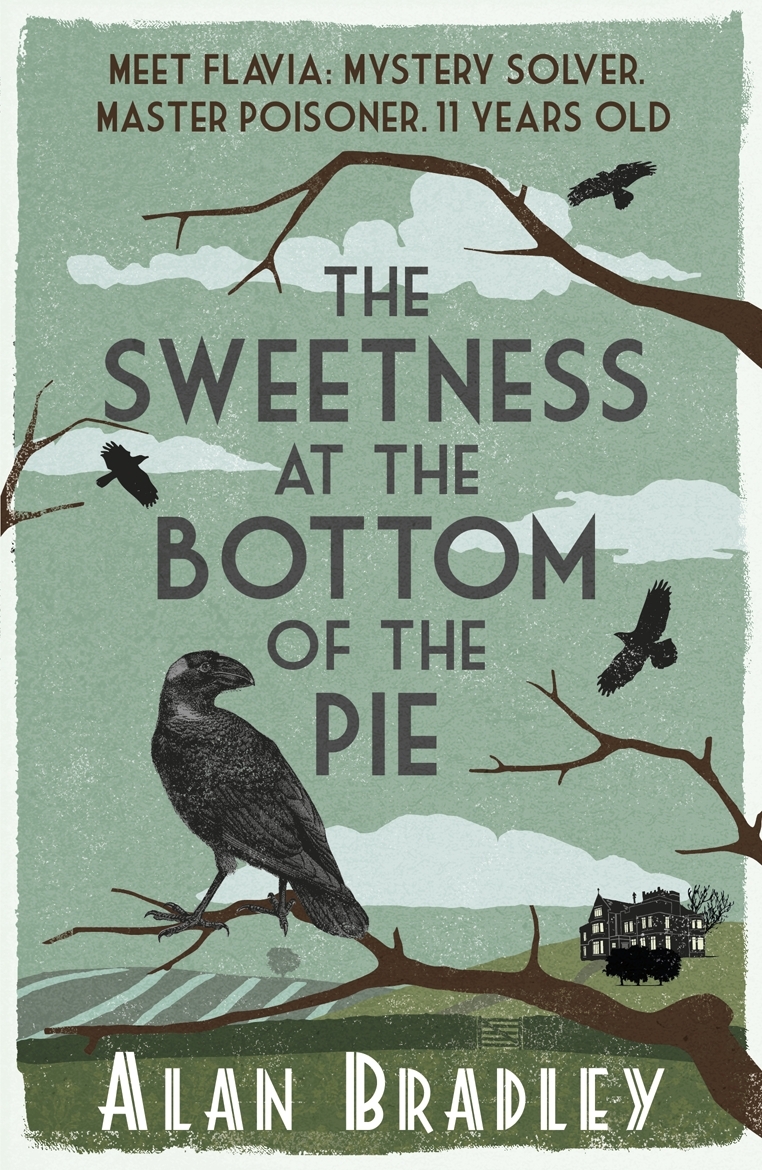
I was recommended it by a fellow English student, after I confessed that out of all the genres I read crime the least. Strange, when I considered that I really enjoy crime TV shows. Regardless, it seemed to be one of the better introductions to crime as it was not too intense, well how could it be with an eleven-year-old protagonist? But, I soon learnt not to underestimate Flavia de Luce.

sweetness

In a traditional crime fiction fashion, the novel opens on a crime, well a sibling crime where Flavia is bound, gagged, and stuffed into the upstairs closet. The act is committed by her two older sisters, Ophelia and Daphne. We soon discover that not only is Flavia used to this treatment, she can quickly free herself from her imprisonment and be the first to arrive for dinner. I really enjoyed Bradley’s style of writing and his introduction of Flavia, as she had a strong voice that demanded my attention. She was also a refreshing protagonist; as she was still affected emotionally but her method of reasoning was methodical often being turned into a scientific experiment that called upon her vast wealth of knowledge. Also her age and the era she was living in made it interesting background to strengthen her character, which also helped her to connect to a modern reader base.

Once you are introduced to the de Luce family, with all the quirks and conflicts, Bradley suddenly inserts the mysterious jack snipe and a man who comes calling for Colonel de Luce (Flavia’s father and only parent). But it is not a crime novel without death, and so the mysterious man was found by Flavia the next morning, half buried in the cucumber patch, issuing his dying words to her. As the police come to suspect her father, Flavia tries to solve the mystery herself by delving into her father’s past to save him frim his present fate. The intricacy of the story between her father’s early experiences with Bonepenny (revealed to be the mystery man) gave Flavia even more mysteries to solve, but I must admit that when the novel slipped into the long back stories I was counting the pages. Yet I cannot fully discredit the back story as it became essential to form a greater narrative in my mind, leading to speculating on many potential suspects. My accusations never rested with one person and flew wildly from one to another, basically anyone who acted in a suspicious manner around Flavia, the Police, and even at the mention of the murder.

Sweetness Fixed3

The idea that Bonepenny was killed by a super sweet pie, which was considered by the Police and Flavia, was a very disappointing cause of death (even for a diabetic). I was praying it would not be the true cause of death, and I was answered by a clever conclusion that needed all of Flavia’s chemistry skills to deduce and solve. However, in the final pages when she was confronted by the murderer, I truly felt as vulnerable as an eleven-year-old girl but Flavia was resourceful enough to find her way out. Bradley ended the book with a resolution to the murder but a vast array of unanswered questions, which means I will be picking up the next book very soon! Overall, the writing style, the era and the crime complexity were detailed enough to make the book a joy to read. Yet, my main interest lies in the characters and how Bradley invested pages to make them dimensional, flawed, and brilliant in their own way.