I hosted a book club during 2013 and many of the books we chose were sensational, so I have decided to share my past reviews.
‘The Storyteller’ was my first Jodi Picoult experience… and I can say assuredly that I LOVED EVERY PAGE! I have had bad experience before with a big name author in the field of themed fiction, and I did have a small trace of dread when starting this book that the experience would be the same. I am not sure if it was the writing style, the use of characters or even the thick mystery that surrounded the plot, but this book captured my attention and made me wanting to keep turning the pages.
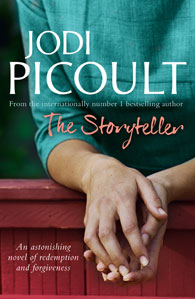 The story itself was broken into separate sections, the first being a relatively obscure story relating to a girl called Ania, her father the baker and a upiór (Polish vampire) . This was an interesting place to begin and it made more sense the further I read into the novel, especially linking it back to Minka’s experiences. Yet it was Sage’s narrative that introduced the reader to the novel, which I thought was an interesting choice of character to carry the story. I was conflicted whether I trusted her as a narrator, due to her shadowy past, being a self-confessed introvert, and her affair with Adam (the funeral director). She did help bring the story into the modern day and make it more accessible for the modern reader, but I was instantly questioning her morals as a narrator (which is a major question throughout the entire novel). However, in the same breath, it is Sage’s detachment from family and religion that make her the best narrator for the piece. As I have stated, Sage has a dubious past that involved the death of her mother, which she blames herself and gave her the facial scarring, and most of her existence is living in fear of family and guilt. She hides away by working night hours in a bakery (which is a passion of hers) and the only has limited social interaction, until she meets the kind old German man, Josef Weber. However, her new friend in Josef admits to her that he was a Nazi and he wishes Sage (a non-practicing Jew) to help him die.
Picoult definitely did not go for a tame topic of moral questioning, and the novel quickly is swept up into the fascination of the Nazi prosecution and moral question behind the relevancy of such “justice”. This is where Leo makes a tidy entrance (and did anyone else know immediately that he was going to be a possible love interest for Sage… I certainly thought so). Leo, the US federal Nazi hunter, was an open, honest character; making his narration was easy to follow and often contained the humourous observations and interactions. Although I did not agree with his moral view point, which was strictly black and white, but that made him such an easy character to read as his opinion was brutally clear. Sage and Leo sections were also interlaced by Josef’s tales of youth and the Polish Vampire story, which kept the viewpoints changing and raising doubts in my mind of whether mercy is a possibility.
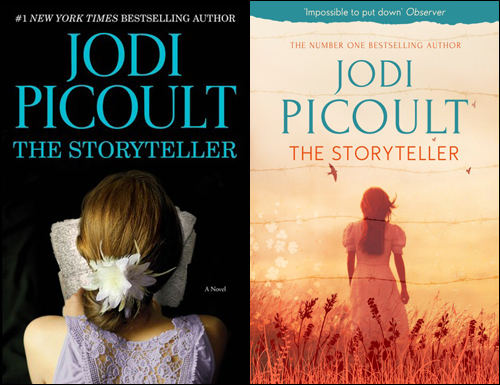
Being a greatly interested in WWII, Josef story was fascinating yet confronting, which I am sure was the intention of Josef and Picoult (shock to create reaction). However it was Minka’s (Sage’s Polish Grandmother) epic recollection of her youth in Poland, then adolescence in the ghettos, and finally her experiences in Auschwitz, that really captured my attention. I think I connected with Minka a lot more than any other character, as strange as it sounds, but I think Picoult was trying to force us into that environment to challenge our impartial moral views and sympathy for the enemy, which Minka has in spades (also shown in her Polish Vampire tale). Regardless of length, Minka’s section was amazing and it linked the rest of the novel in so well, even posing more questions in the mind of the reader. I did think it rather coincidental that Minka would know the man, Josef claimed to be (but reading into Josef’s story and heart beyond Minka and Sage it was clear why he ended up where he did).
The novel raced to a conclusion after the revelation of Minka’s history, but the question of moral justice and sympathies towards an enemy was left open. As Sage took the situation out of Leo/ the Government’s hands and decided his fate, which also opened another can of worms on the euthanasia debate (which did relate to the Nazi mentality). I also guessed the reasonable terrible plot twist for Sage after the deed was done, early on in Minka’s narration and when I revisited Josef’s narration. Otherwise, it was an amazing read and so beautifully interwoven that I did not feel cheated in any part of the story; just utterly content and suffered ‘book hangover’ for a few days after.
 The Novel Nomad